
Uncategorized
The Future of Smart and Secure Access Control
Jun
Introduction
Security has become a top priority for homeowners and businesses alike. Traditional lock-and-key systems, while effective, are increasingly being replaced by advanced digital locking solutions that offer greater convenience, security, and control. Digital locks are transforming the way people protect their properties by combining modern technology with user-friendly functionality.
In this guide, we’ll explore what digital locks are, their benefits, key features, and why they are becoming the preferred choice for modern security systems.
What Are Digital Locks?
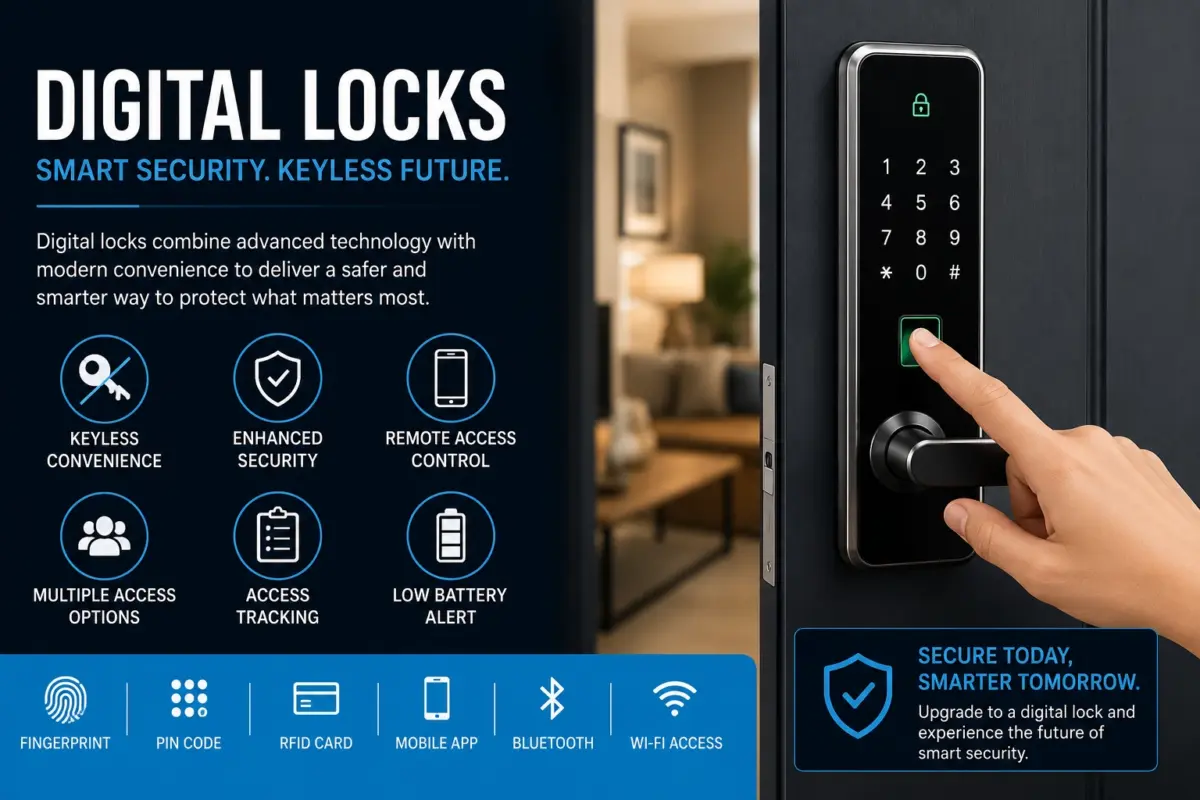
Digital locks are electronic locking systems that eliminate the need for traditional keys. Instead, they use various authentication methods such as PIN codes, fingerprint recognition, RFID cards, smartphone apps, or Bluetooth connectivity to grant access.
These smart security solutions are commonly installed on residential doors, commercial properties, offices, hotels, and rental accommodations to enhance security and simplify access management.
Benefits of Digital Locks
1. Enhanced Security
Digital locks offer advanced security features that make unauthorized access significantly more difficult. Many models include anti-tamper alarms, automatic locking functions, and encrypted authentication systems.
2. Keyless Convenience
One of the biggest advantages of digital locks is the elimination of physical keys. Users no longer need to worry about lost, stolen, or duplicated keys.
3. Multiple Access Methods
Modern digital locks provide flexible access options, including:
- Fingerprint recognition
- PIN code entry
- RFID cards or key fobs
- Smartphone app control
- Bluetooth connectivity
- Remote access via Wi-Fi
4. Remote Access Control
Smart digital locks allow property owners to lock or unlock doors remotely through mobile applications. This feature is particularly useful for landlords, Airbnb hosts, and business owners.
5. Access Tracking
Many digital locks maintain access logs, allowing users to monitor who entered the property and when. This feature is valuable for both residential and commercial security management.
Types of Digital Locks
Fingerprint Digital Locks
These locks use biometric technology to identify authorized users through their fingerprints. They provide fast and secure access while eliminating the need for passwords or cards.
Keypad Digital Locks
Keypad locks require users to enter a PIN code to unlock the door. They are widely used in offices, apartments, and residential properties.
RFID Card Locks
Popular in hotels and commercial buildings, RFID locks use access cards or key fobs for quick entry.
Smart Wi-Fi Locks
Wi-Fi-enabled locks connect to smart home systems and allow users to control access remotely through mobile apps.
Bluetooth Digital Locks
Bluetooth locks connect directly to smartphones, enabling secure access without internet connectivity.
Key Features to Consider
When choosing a digital lock, consider the following features:
Security Features
- Anti-tamper protection
- Auto-lock functionality
- Emergency override options
- Encryption technology
Battery Life
Most digital locks are battery-operated. Look for models with long battery life and low-battery alerts.
User Capacity
For businesses or large households, choose a lock that supports multiple users and access credentials.
Smart Home Compatibility
Ensure compatibility with smart home platforms if you plan to integrate the lock into an existing smart security system.
Weather Resistance
For external doors, select a digital lock designed to withstand various weather conditions.
Applications of Digital Locks
Residential Properties
Homeowners benefit from improved security, keyless access, and remote monitoring capabilities.
Commercial Buildings
Businesses use digital locks to manage employee access and improve overall building security.
Hotels and Hospitality
Hotels rely on digital locking systems to provide secure and convenient guest access.
Rental Properties
Landlords can grant temporary access to tenants without needing physical key exchanges.
Why Digital Locks Are a Smart Investment
Digital locks provide a perfect balance of security, convenience, and technological innovation. As smart homes and connected devices become more common, digital locks offer a future-ready solution for property protection.
By eliminating traditional keys and introducing intelligent access control, digital locks reduce security risks while simplifying everyday access management.
